Luxor Temple and Karnak — Understanding the Relationship
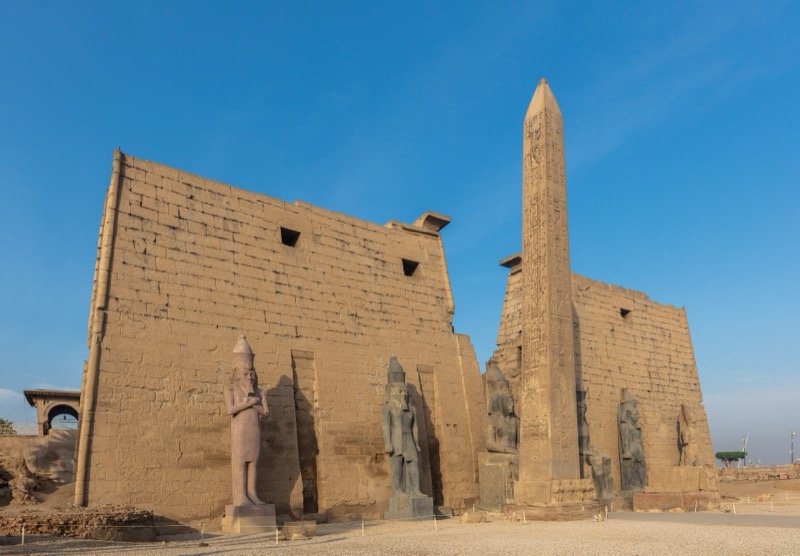
Luxor Temple and Karnak are not two independent monuments — they are the southern and northern ends of a single ceremonial landscape. The ancient Egyptians called Karnak Ipet-Isut, meaning "The Most Perfect of Places," and Luxor Temple Ipet-Resyt, "The Southern Sanctuary." The two were linked by a processional avenue lined with sphinx statues, which was fully restored to public access in 2021 after decades of archaeological work and forms one of the most dramatic walks in Egypt.
Luxor Temple was primarily built by Amenhotep III in the 14th century BCE and significantly extended by Ramesses II, who added the colossal entrance pylon and the two famous seated statues that still flank the entrance today. The temple was later incorporated into a Roman camp, a Coptic church, and a medieval mosque — all of which remain visible within or adjacent to the main structure, creating a layering of civilisations rarely seen at a single site.
Karnak, three kilometres to the north, was built continuously from approximately 2055 BCE into the Ptolemaic period, making it one of the longest-running building projects in history. Its Great Hypostyle Hall — a forest of 134 massive papyrus-form columns covering an area of 5,000 square metres — is the largest room of any religious building ever constructed.
Related sites on the West Bank are covered in our Valley of the Kings guide.
Practical Information: Both Sites
Luxor Temple
- HoursDaily 06:00–22:00
- Entry feeEGP 260 foreigners / EGP 130 students
- Evening visitExceptionally beautiful when illuminated; book for post-sunset to avoid afternoon heat in summer
- Duration90 minutes to 3 hours depending on depth of interest
Karnak Complex
- HoursDaily 06:00–17:30 (winter); 06:00–18:00 (summer)
- Entry feeEGP 360 foreigners / EGP 180 students
- Sound & LightEvenings; three shows in English, French, Arabic — check current schedule at the site ticket office
- DurationMinimum 2 hours; 4–5 hours for full complex exploration
Karnak: Routing Through the Complex
Karnak's scale is genuinely disorienting on a first visit. Most visitors enter through the main first pylon and head directly down the main axis, missing significant secondary areas. The routing below maximises your time.
First Pylon to Hypostyle Hall
Enter from the Ram-Headed Sphinx Avenue, pass through the unfinished First Pylon (note the mudbrick construction ramp still visible on the interior face — it was never dismantled), and into the forecourt. The Second Pylon leads to the Great Hypostyle Hall. Spend significant time here: look for the contrast between the larger central columns (built by Seti I) and the smaller flanking columns (completed by Ramesses II), and note how the paint survives in the upper registers where it was protected from the sun.
Festival Hall of Thutmose III
Beyond the main axis, the Festival Hall of Thutmose III is architecturally distinctive — its tent-pole columns are unlike anything elsewhere in Egypt, designed to evoke the military campaign tents of the pharaoh. The room is often called the "Botanical Garden Room" because of the painted reliefs cataloguing plant and animal species encountered during Thutmose III's campaigns into Syria and the Levant.
Sacred Lake and Obelisks
The Sacred Lake — used for ritual purification — offers the best overview of the complex from the seating area on its northern bank. Near the lake stands one of two obelisks erected by Hatshepsut; the taller of the pair (29.5 metres) still stands and is among the largest surviving obelisks. The Open Air Museum, north of the main enclosure, displays reconstructed chapels from earlier periods and is included in the main ticket — most visitors miss it entirely.
For the West Bank temples and tombs visible from Karnak across the Nile, see our Valley of the Kings guide. For the full Aswan and Nubian temple journey, see our Aswan Highlights guide.
Frequently Asked Questions
Planning a Luxor Itinerary?
Our full Luxor guide covers both East and West Bank sites in a single document, with suggested two-day and four-day itineraries. See our membership plans or contact our team.
Open an Enquiry